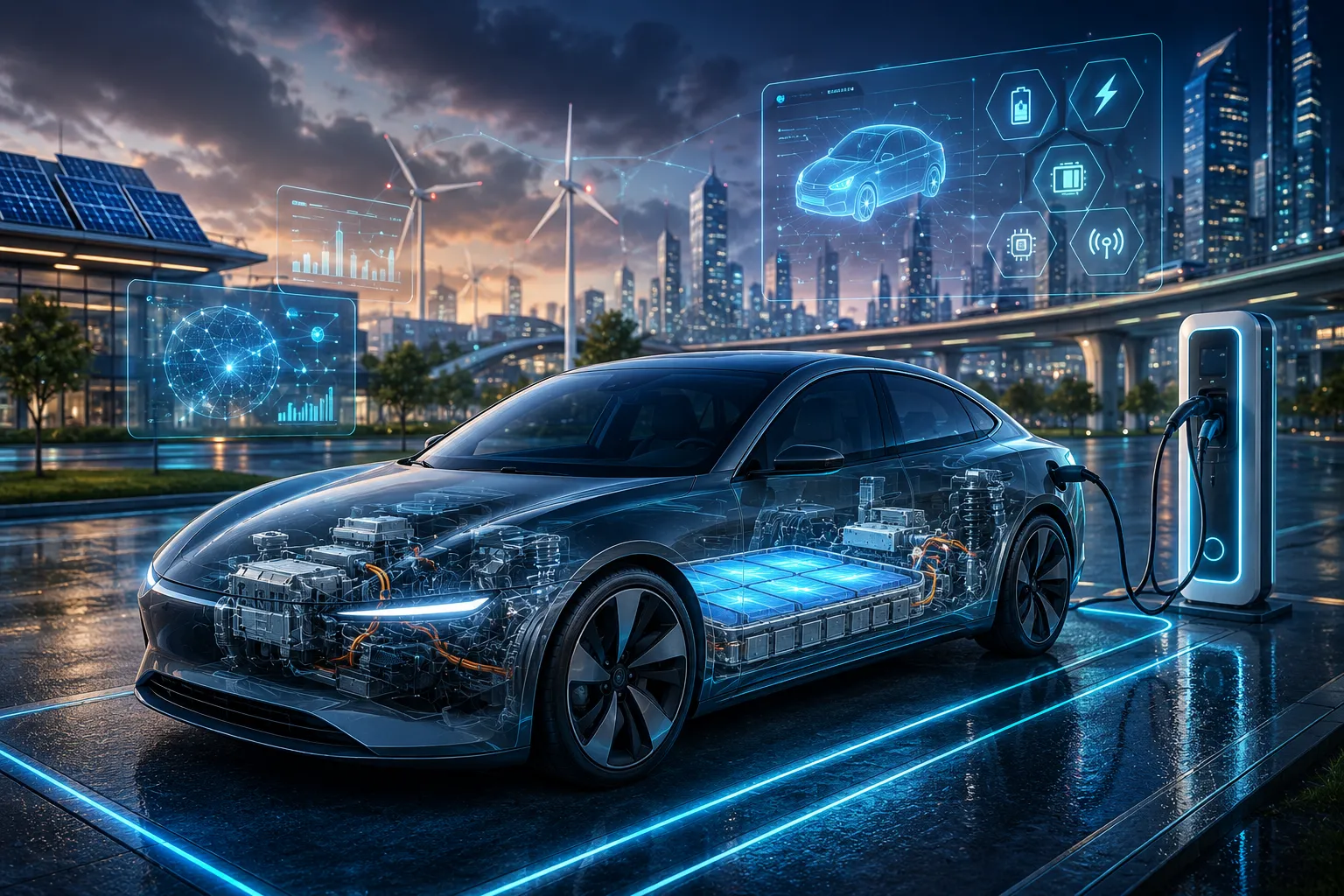
Vehicle technology combines electric powertrains, batteries, sensors, software and public infrastructure. It can make travel cleaner and more useful when it is designed around real people and places.
1. Electric Vehicles & Power Electronics
Electric vehicles use motors and battery systems rather than relying entirely on internal-combustion engines. Power electronics, thermal management and regenerative braking all influence efficiency, performance and reliability.
2. EV Batteries & Charging Technology
Battery chemistry, battery-management systems and charging infrastructure shape an EV’s practicality. Safe charging, durable cells and convenient access are essential parts of wider adoption.
3. Connected Vehicles & V2X
Connected vehicles can exchange useful data with services and infrastructure for navigation, updates and maintenance. Vehicle-to-everything (V2X) research explores how compatible vehicles and infrastructure might share timely information. Security and privacy are critical.
4. Driver Assistance & Vehicle Software
Cameras, radar and sensors can support parking, lane assistance, warnings and other functions. Driver assistance is not the same as full autonomous driving: systems have limits, and people must stay attentive and follow local laws.
5. Smart Infrastructure & Sustainable Mobility
Better public transport, active travel, charging networks and thoughtful urban design all contribute to cleaner mobility. Technology should serve accessibility, safety and reduced environmental impact.
Return to the Technology Hub or read the deeper guide to vehicle technology.