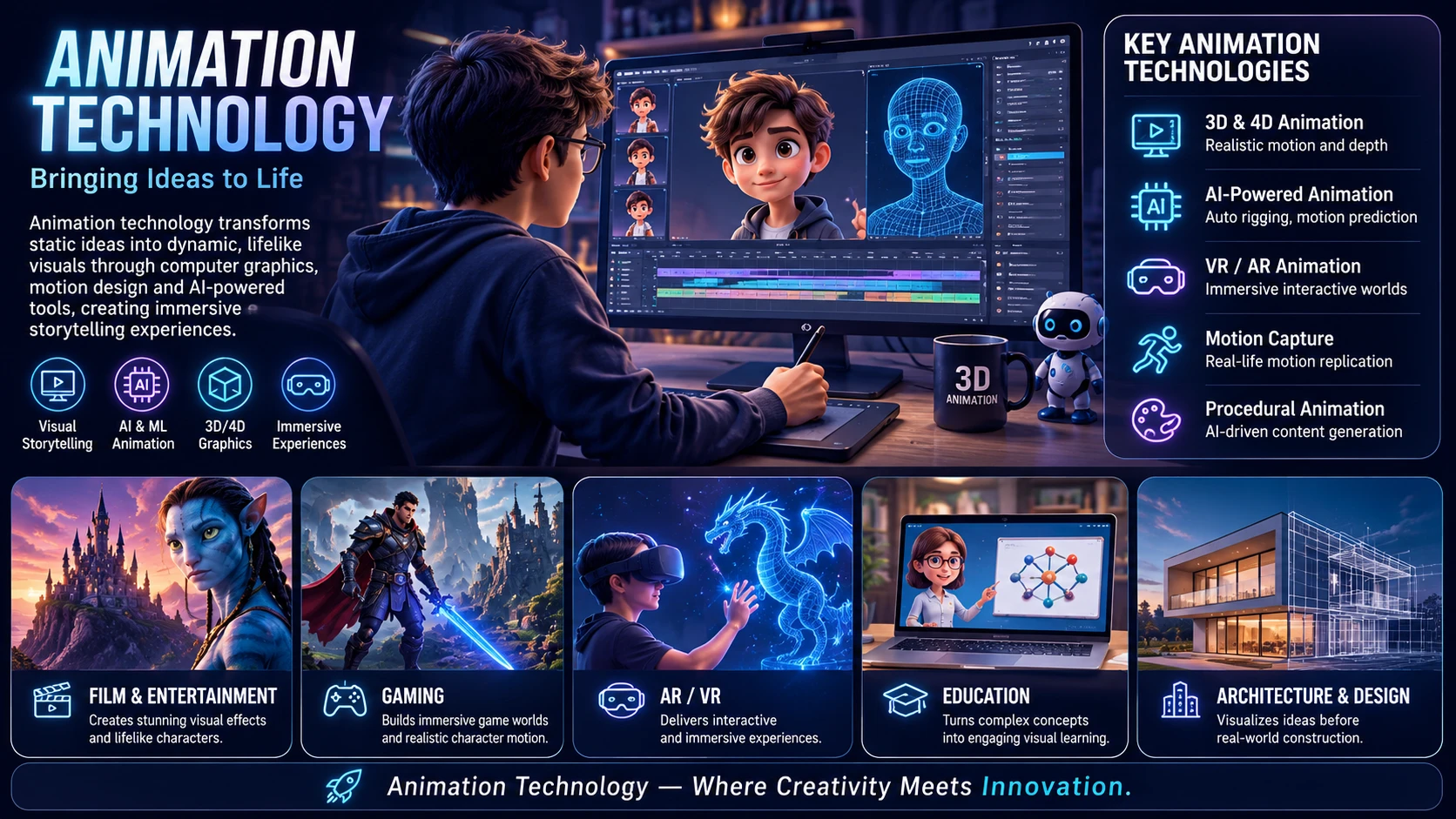
Animation technology is the collection of tools and workflows used to create moving images, interactive scenes and visual simulations. It supports entertainment, education, architecture and product design, but its core purpose is simple: make an idea visible over time. Artists and technical teams work together to choose how a scene looks, moves, responds and reaches an audience.
What Is Animation Technology?
Animation is more than a final render. It is a pipeline of decisions: concept work, modelling, movement, lighting, editing and delivery. Digital tools make revision easier and enable scenes that would be difficult to build physically. They do not remove the need for artistic judgement about pacing, clarity and meaning.
2D and 3D Animation
Two-dimensional animation arranges drawings, shapes or images across time. Three-dimensional animation creates a scene with depth, cameras and lights. Both can be expressive and both require careful design. The right approach depends on the story, the intended experience and the resources available.
Modeling and Digital Characters
Modelling turns a concept into a digital form. Artists define silhouette, surface and proportion, then add textures that describe materials and detail. A character or object should be designed for its role in a scene, not simply for technical complexity. Clean structure makes later changes easier.
Rigging and Motion
A rig is a controllable structure that lets an animator pose and move a model. Animation may be hand-crafted, procedural or informed by captured performance. Timing remains central: small changes in acceleration, pause and weight can make motion feel clear and believable without relying on a particular franchise or recognisable character.
Rendering Technology
Rendering calculates how a scene becomes an image. It accounts for geometry, materials, camera position and light. Higher fidelity can require more computing time, so artists balance detail with schedule and purpose. A quick preview can be ideal for iteration; a more detailed render can be reserved for final delivery.
Motion Capture
Motion capture records movement so it can inform a digital performance. It can save time and preserve subtle physical detail, but it still needs interpretation, cleanup and direction. A captured movement is one input to an animated result, not a replacement for creative choices.
Real-Time Animation
Real-time tools produce an image quickly enough for people to explore a scene interactively. This is useful for visualisation, live production and immersive learning because teams can test camera angles, materials and pacing as they work. Efficient assets and careful optimisation make that responsiveness possible.
AI in Animation
AI-assisted tools may help with organisation, early concept exploration or repetitive production tasks. They should be used transparently and with respect for creators’ rights. A generated reference is not evidence of a real production, location or person, and it should not be presented as one.
Virtual Production
Virtual production connects real-time environments, cameras and practical performance so teams can evaluate a scene earlier in the process. Its value is collaboration: creative and technical decisions can be discussed with more context before a final image is made.
Creative Workflows and Care
A healthy animation workflow gives artists room to explore while keeping technical decisions visible. Teams commonly use references, tests and short previews to check whether an idea communicates before investing in a detailed scene. File organisation, version control and clear crediting make collaboration easier. Accessibility can be part of the process as well: captions, readable contrast and thoughtful motion choices help more people engage with an experience. As tools become faster, these human decisions become more important, not less. Technology can shorten a task, but it cannot decide what an audience should feel or what a project should say. The strongest work pairs efficient production with an intentional visual voice.
Animation Pipelines and Production Workflow
Modern animation is a pipeline: concept development, modelling, rigging, animation, simulation, lighting, rendering and compositing. Each step blends creative and technical work, and short tests help teams refine an idea before final delivery.
Simulation and Physics in Animation
Simulation can describe cloth, hair, particles, fluids and environmental effects. Physics gives artists a starting point, while direction shapes timing and detail. These methods also support education, engineering visualisation, architecture and scientific communication.
Storyboards and layout work turn an early idea into a plan for shots, movement and composition. Reusable digital assets can save time when they are organised clearly, while scene assembly brings models, environments, cameras and sound references together for review. Preview renders let artists test pacing and lighting before expensive final rendering. Compositing then combines image layers and finishing choices into a coherent result. This workflow depends on collaboration between artists, technical directors and producers, who balance creative goals with practical time and computing limits.
Clear naming, shared references and regular review sessions help a production remain understandable as it grows. Technical teams can prepare efficient assets and reliable scene tools, while artists use those systems to protect visual consistency. This partnership makes iteration more deliberate: a change can be tested in context, discussed by the people affected and carried through the pipeline without losing the original intention.
Preview rendering lets teams assess a scene before final output, while compositing brings rendered elements into one finished frame. Real-time review can reduce unnecessary rendering by helping artists adjust camera movement, lighting and timing early.
The Future of Animation Technology
The future is likely to bring more flexible real-time tools, accessible workflows and better collaboration across disciplines. The essential skill remains the same: use technology to communicate an idea with care. Return to the Animation Technology guide or see how AI technology can support, rather than replace, creative work.