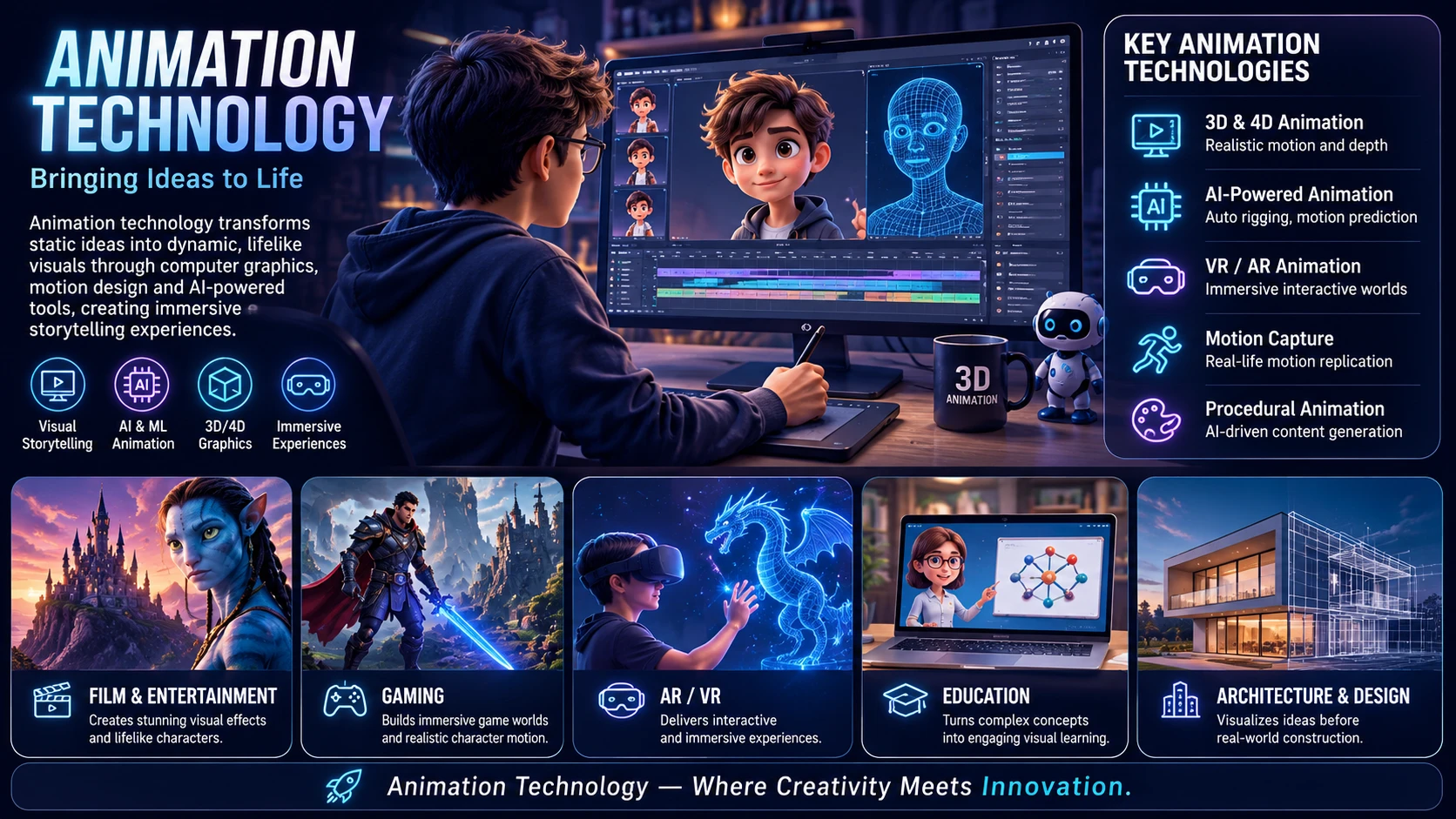
The craft of animation is a chain of creative and technical decisions. Software speeds up work, but artists still shape the story, timing, emotion and visual identity.
1. Computer Graphics, 3D Modelling & Texturing
Computer graphics creates images with digital tools. Artists build 3D models, give them surface detail through texturing and prepare them for lighting and movement. These choices give a scene its material, scale and personality.
2. From Concept to Final Output
Concept ↓ Modelling ↓ Texturing ↓ Rigging ↓ Animation ↓ Rendering ↓ Final output
Rigging gives a character or object a controllable structure. Animation then creates movement frame by frame or with procedural tools. A clear workflow helps teams iterate without losing creative direction.
3. Motion Capture & Real-Time Graphics
Motion capture records physical movement and applies it to digital characters. Real-time engines render scenes quickly enough to explore and adjust them interactively, which is valuable for games, virtual production and design previews.
4. AI-Assisted Animation, AR & VR
AI tools can assist with repetitive tasks, early visual exploration and workflow organisation. AR and VR create immersive experiences. These tools should complement creative judgement, not remove authorship or use copyrighted characters without permission.
5. Where animation is used
Animation helps film, games, education, marketing, architecture and virtual reality communicate ideas that are hard to show with words alone.
Continue to Space Technology or read the deeper guide to animation technology.